
Auto major Maruti Suzuki India on Friday said its consolidated net profit declined by 1 per cent year-on-year to Rs 3,911 crore in the fourth quarter ended March 31, 2025, on account of higher expenses. The country's largest carmaker reported a net profit of Rs 3,952 crore in the January-March quarter of FY24.

Maruti Suzuki India on Friday said it is recalling 7,213 units of its Baleno RS model due to a suspected defect in vacuum pump, which assists brake function. The recall will impact vehicles manufactured between October 27, 2016 and November 1, 2019, Maruti Suzuki India said in a regulatory filing. "It is suspected that there is a possible defect in vacuum pump, which assists the brake function.

India's sedan market is experiencing a notable divergence: affordable entry-level sedans are gaining market share, while midsize sedans are seeing a significant decline as buyers increasingly opt for SUVs in higher price brackets.

India's passenger vehicle sales are estimated to have surged by approximately 35 per cent to about 4.5 lakh units in August, driven by strong performances from major automakers like Maruti Suzuki India, Tata Motors Passenger Vehicles, and Mahindra & Mahindra, with the industry entering the festive season with optimism.

The country's largest car maker, Maruti Suzuki India, on Tuesday launched a new version of its small car Estilo with a fuel efficient engine at an introductory price between Rs 3.12 lakh and Rs 3.95 lakh (ex-showroom, Delhi).

Maruti Suzuki India on Wednesday reported a 47 per cent jump in its net profit to Rs 3,650 crore for the April-June quarter on account of cost reduction efforts, favourable commodity prices and foreign exchange gains. The auto major had posted a net profit of Rs 2,485 crore in the April-June quarter of last fiscal.

Indian carmakers, including Maruti Suzuki and Kia India, reported robust sales growth in May 2026, with both companies achieving their highest-ever monthly sales despite rising fuel prices. Maruti Suzuki's domestic sales surged to 1,93,535 units, while Kia India recorded 27,586 units, driven by strong demand in mini and compact segments and a shift towards electric and CNG vehicles.
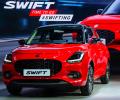
Passenger vehicle sales in India are estimated to have surged by nearly 25 per cent in June 2024, reaching approximately 4 lakh units, with Maruti Suzuki, Tata Motors PV, and Mahindra & Mahindra leading the growth, despite concerns over geopolitical tensions and monsoon impact.

The country's largest carmaker Maruti Suzuki India on Monday said it will hike prices across models from next month amid rising input costs. In a regulatory filing, the company said, ".... over the past year the cost of company's vehicles continue to be adversely impacted due to increase in various input costs." Hence, it has become imperative to pass on some impact of the additional cost to the customers through a price rise, it added.

Automotive (auto) stocks have been among the best performers in the BSE 200 index in recent months. More than half of the top 15 gainers over the past one, two, and three months have come from the sector.

The 200-DMA is a closely watched indicator of a stock's long-term trend and can serve as an early warning of trouble.

'I am now driving an electric vehicle. I have lost faith in petrol-run cars.'

Concerned over sales growth coming mainly from two of its models - Dzire and Swift - country's largest carmaker Maruti Suzuki India said unless its other products contribute equally the company could face problems in the long-term.

The country's largest carmaker Maruti Suzuki India (MSI) on Thursday said it has appointed Hisashi Takeuchi as the new managing director and CEO with effect from April 1, 2022. The company's board in its meeting held on Thursday, appointed Takeuchi as the managing director and CEO from April 1, consequent to the completion of the term of Kenichi Ayukawa on March 31, 2022, MSI said in a statement. In order to facilitate a smooth transition, Ayukawa will continue as a whole-time Director designated as Executive Vice Chairman till September 30, 2022, and will continue to provide guidance to the auto major, it added.
The name of the country's most popular car brand, Maruti Udyog Ltd, has been changed to 'Maruti Suzuki India Ltd' with effect from September 17.

Set to be unveiled at the Auto Expo in New Delhi, it is likely to be priced below Rs 400,000, and will come with air-conditioning and the option to choose from six colours.

As India's festive season approaches, passenger vehicle dealers are seeing a notable increase in inventories, yet discounts remain surprisingly moderate compared to previous years, signalling a tighter demand-supply balance in the automotive market.
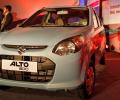
The country's largest automobile maker Maruti Suzuki India (MSI) on Monday said it will hike prices of its cars in the second quarter of the current fiscal due to increase in the input costs. "Over the past year, the cost of the company's vehicles continue to be adversely impacted due to increase in various input costs. "Hence, it has become imperative for the company to pass on some impact of the above additional cost to customers through a price rise," Maruti Suzuki India said in a regulatory filing.

More than 40 per cent of Cars24's sales are now linked to rural registration and transport office (RTO) locations, although procurement remains concentrated in urban markets.

Maruti Suzuki growing in double-digits; Suzuki's Japan Q1 top line rose only 1%.

In the domestic market, the car has been well accepted and currently the company has over 80,000 bookings for the model.

Passenger vehicle sales in India kicked off on a flat note in new fiscal 2024-25 with 3.38 lakh units sold in April, impacted by high base effect and muted demand due to the ongoing general elections. Dispatches of passenger vehicles from manufacturers to dealers were at 338,341 units in April 2024 as compared to 332,468 units in the same month last year, a growth of 1.77 per cent with major players Maruti Suzuki India, Hyundai and Tata Motors reporting marginal growth in their domestic wholesales.

The growing rift between MSIL and rival automakers has complicated the government's efforts to finalise the CAFE norms.

The scheme, called 'Suhana Safar', targeted customers who aspire to own a car but were hesitant because of concerns around arranging the down payment or managing future EMI obligations.
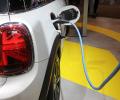
Maruti Suzuki India will launch electric vehicles in the country only after 2025 as demand for such vehicles at the moment is less and it would like to sell around 10,000 units a month whenever it enters the electric mobility space, company chairman RC Bhargava said on Wednesday. Addressing a virtual conference on the company's second quarter earnings, he said under the current circumstances a lot of things in the EV ecosystem such as batteries, charging infrastructure and electric supply are done by other parties and therefore the costing is not in the hands of the company. Also with fuel prices going up, car market leader Maruti Suzuki India is intensifying its focus on more CNG offerings of its models.
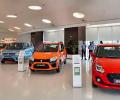
Maruti Suzuki India will increase the prices of its vehicles 'substantially' from next month as it looks to offset the impact of rising input costs and make provisions to update the model range to conform to stricter emission norms which kick in from April 2023. In a regulatory filing on Friday, the country's largest carmaker said it continues to witness increased cost pressure driven by overall inflation and recent regulatory requirements. While the automaker makes maximum effort to reduce cost and partially offset the increase, it has become imperative to pass on some of the impact through a price increase, it added.
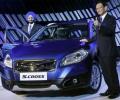
Speaking after the meeting, Maruti Suzuki chairman R C Bhargava said the company will export 'Baleno' at the moment
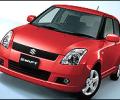
MSI's exports increased by 54.34 per cent to 14,386 units in January, from 9,321 units in the year-ago period.

In a filing to the BSE on Monday, Maruti Suzuki India said Suzuki Motor Corporation's stake in MSI has increased to 56.2 per cent from 54.2 per cent due to a share swap agreement with the domestic car market leader to acquire Suzuki Powertrain India Ltd.

Maruti Suzuki India's net profit surged 80.3 per cent to Rs 3,716.5 crore in the September quarter, driven by better sales, softening commodity prices, cost reduction efforts and higher non-operating income. The company had delivered a net profit of Rs 2,061.5 crore in the year-ago period, Maruti Suzuki India said in a statement on Friday. Maruti said it is expecting the affordability of small cars in the domestic market to come back in the next 2-3 years in the face of rising income levels of people and a growing economy, among others.

Maruti Suzuki Chairman R C Bhargava is pushing for increased government incentives for biogas-powered vehicles over hybrids, emphasising their net-zero carbon emissions and the valuable organic manure they produce, while also advocating for continued GST benefits for electric vehicles.

In May, MSI recorded domestic sales at 89,478 units, compared to 93,519 units in the year-ago period, registering a fall of 4.32 per cent.

Leading carmakers Maruti Suzuki and Hyundai on Thursday reported a dip in wholesales in July as companies reduced vehicle dispatches to dealers amid moderation in demand. Maruti Suzuki India said its total domestic passenger vehicle sales stood at 137,463 units in July against 152,126 units in the year-ago month, down 9.64 per cent.

The company's earlier highest for total and domestic sales stood at 1,21,952 units and 1,10,424 units respectively in March 2011.
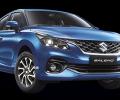
Maruti Suzuki India on Tuesday reported an 18 per cent year-on-year dip in consolidated net profit at Rs 3,102 crore for the second quarter ended September hit by the withdrawal of indexation benefit and change in the tax rate on long term capital gains on debt mutual funds. The country's largest carmaker had posted a net profit of Rs 3,786 crore in the July-September quarter of last fiscal.
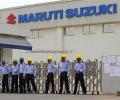
Maruti Suzuki, India's biggest carmaker, reported a 36 per cent rise in third-quarter net profit, matching estimates, as favourable foreign exchange movement and cost reduction efforts offset falling sales.
The company also recorded its highest-ever annual sales in 2008-09 at 792,167 units as against 764,842 units in the previous fiscal, a rise of 3.57 per cent. The previous highest annual sales were in 2007-08. '2008-09 marked Maruti Suzuki's silver jubilee year in India. Over these 25 years, the company sold over 70 lakh cars in the domestic market. Additionally, over 5 lakh cars have been exported the world over,' Maruti Suzuki India said in a statement.

In 2025, the Maruti Suzuki Dzire has emerged as India's top-selling car, while sport utility vehicles continue to rule the broader passenger vehicle market, capturing almost 55 per cent of the segment.

Car market leader Maruti Suzuki India on Thursday said it will hike prices by up to Rs 32,500 across various models from February 1 to partially offset the rise in input costs. Due to rising input costs and operational expenses, the company plans to increase car prices, starting February 1, 2025, Maruti Suzuki India said in a regulatory filing.
Associated Motorways, the sole agent for Suzuki-Maruti in Sri Lanka has placed orders for Zen cars from the Suzuki manufacturing plant in India following high demand. Despite the fact that prospects for car sales in Sri Lanka were not attractive as in other countries due to the country's economic condition, Maruti-Suzuki has found high demand for its latest Zen version.
